
Handmade ricotta cappelletti in brown butter with earthy maitake, pickled daikon, and aged balsamic finished tableside
I was tired of the same old thing… Tampa’s habit of putting the same cuisine in a new building and calling it fresh. We need another sushi bar? Really?
Feeling splurgy, I searched for a new and sophisticated restaurant offering something different. I had heard whisperings of a new concept, so I gathered the tasting crew, and we zipped over to Kinjo.
From the outside, the restaurant gives off a quiet, "If you know, you know" vibe. The blind-covered windows, small sign, and nondescript exterior make it easy to overlook. There’s nothing to indicate that it offers a destination-level experience inside. I half-wondered if we would need a speakeasy password to get in—but we didn’t.
Stepping through the door reveals an intimate, modern oasis. At the back of the room, there’s a 10-seat Chef’s Counter set up for dinner service, and the front of the dining room features several convertible tables. The décor boasts elegant simplicity, highlighted by a few functional pieces, such as Lineapasta extrusion machines, with trays of fresh pasta beneath them. One wall is lined with a short wine refrigerator that also serves as a counter. The room looks polished and refined. We are greeted twice and seated. "Kinjo" means "neighbor" in Japanese, and I can feel that sense of hospitality.
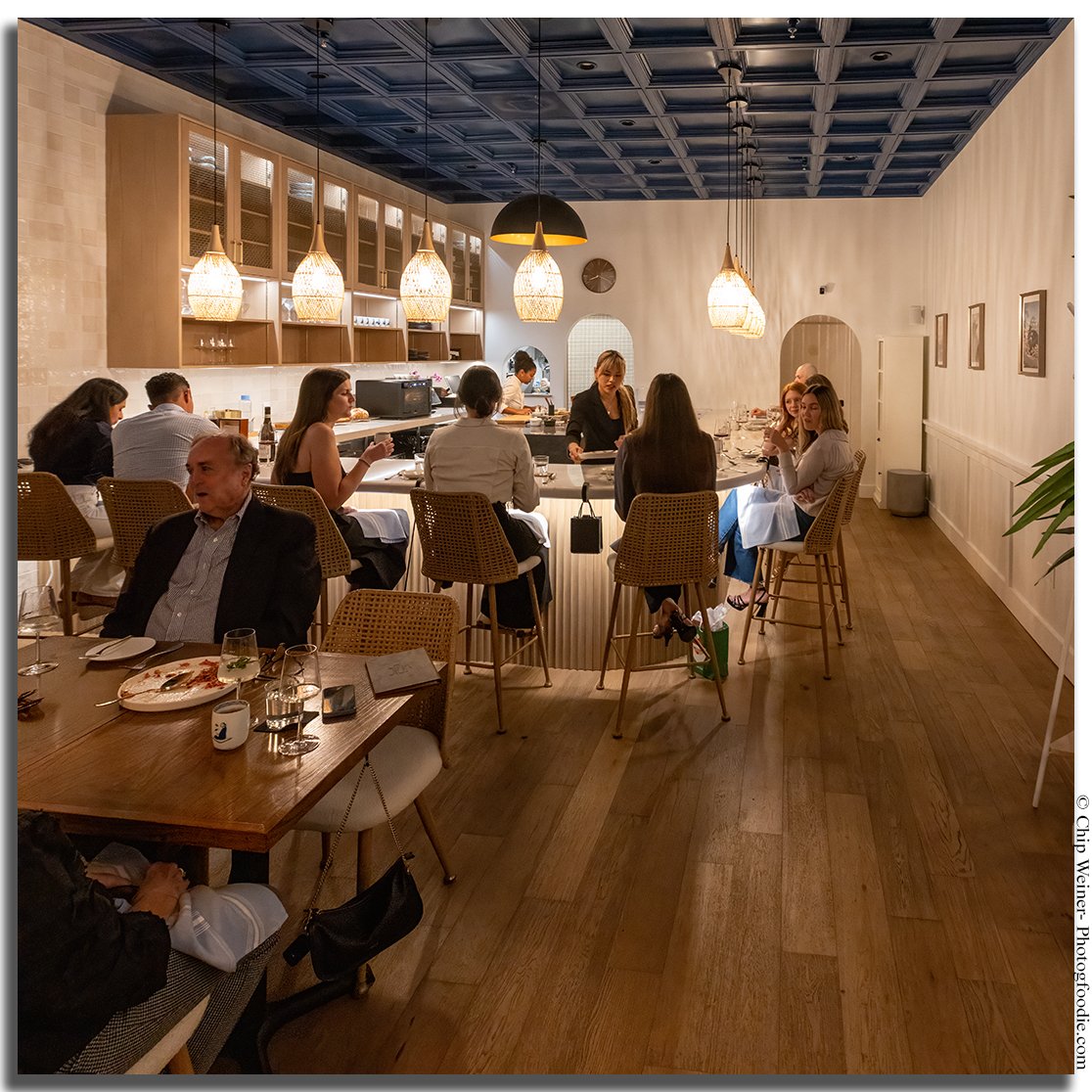
Chef’s counter dining experience at Kinjo featuring Japanese-Italian Itameshi cuisine

Kinjo’s exterior shows nothing to indicate that it offers a destination-level experience inside.
We are here for Itameshi Wafu Italian. Think Japanese Chef de Cuisine with an Italian Executive Chef looking over their shoulder. It’s a Japanese take on Italian food, and I am excited to see how this fusion works (because it doesn’t seem like it should.)
Each meal begins with a refreshing iced Hōjicha (roasted tea) service, offering a delightful smoky, nutty, and smooth surprise.
Kinjo’s seasonal menu consists of three parts: Antipasti, Primi, and Dolce. The in-house version differs slightly from the online menu, but in our experience, that’s a good thing.
The 36-item wine list is an admirable collection of by-the-glass and bottle selections with a strong Italian focus (as one might imagine). Our server knows every bottle. We select a delicious Chianti to pair with what's to come.
I argue with myself about paying for bread service at a restaurant, something that used to be complimentary. However, the $15 charge here is worth it for the artisanal bread, which includes both sourdough and focaccia, each served with unique toppings. The cultured butter with confit yolk and the whipped ricotta with extra-virgin olive oil are simply too good to pass up—outstanding!
Picking antipasti from the eight options is tough, so the four of us pick what we think will be winners.
Akami Spaghettoni ($30) is what it sounds like. Akami tuna, flown in daily from Japan, is cut into strips resembling spaghetti noodles and covered with a bagna cauda cream. It’s a rich, buttery, heavy cream sprinkled with lime zest and Sicilian pistachio crumble. Combining that sauce with the robust tuna is a sophisticated surprise. It’s bowl lickable.

Kinjo’s bread service brings contrast and comfort—crusty sourdough with rich cultured butter and confit yolk, alongside airy focaccia topped with whipped ricotta and EVOO

Akami spaghettoni layered with bagna cauda cream, bright lime, and crushed pistachio—an elegant balance of richness, citrus, and crunch
The classic Italian starter Carpaccio ($44) feels like an obvious choice for the menu and is perfect for a Japanese twist. Toki whisky and shiso gremolata, in place of the usual arugula, add a fresh, herbal, citrusy brightness to the shaved, tender, triple-seared wagyu beef, finished with capers, adding a salty punch. It is beautifully plated and vanishes quickly.
The menu describes their Crostini ($19) as having pickled anchovy. As soon as I see it, my thoughts go to those small, oily, salty bits on top of pizzas. But one of the team wants to try them. Turns out they are crunchy wedges paired with plump, meaty anchovies, stracciatella (that creamy good stuff inside of burrata), marinated tomato, and a taste of basil. It’s a tight composition—salty, creamy, bright, and crunchy—where the anchovies happily aren’t the story, but the anchor.

Kinjo Wagyu Carpaccio: Toki Whisky, Shiso Gremolata and Lemon
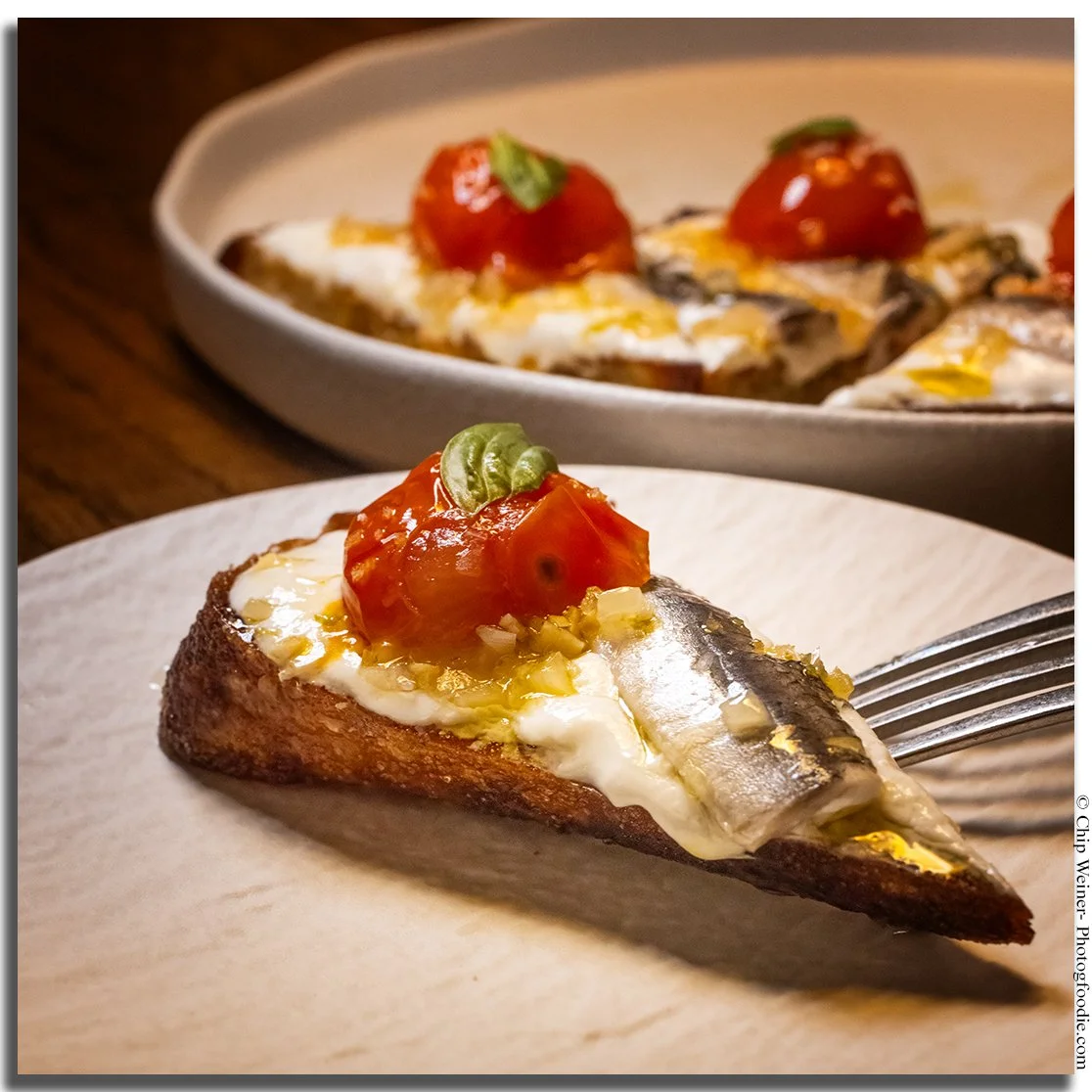
Crostini- pickled anchovy, Stracciatella, marinated tomato.
There are four of us and four Primi selections on the menu, making the choice easy: one of each.
Kinjo’s Tajarin Bolognese ($32) is served over thin, delicate noodles, blended with mortadella pork and beef from Providence cattle, and accented with Japanese curry spices. The combination creates a rich, meaty sauce topped with a generous serving of fresh Parmesan. The aromatics from the curry are edgy and delicious. This is the zigzag, the volley between Italian and Japanese that makes this cuisine so interesting.
Pappardelle ($38) with wagyu short rib is one of the additions not shown on the online menu. It comes with a warning from our server about being spicy, so I’m cautious but intrigued. Wide pappardelle noodles are covered with tender short rib and creamy taleggio fondue. The heat comes from tobanjan, a spicy, savory, fermented paste. But on this dish is a 5 on my 10-point heat scale. Aged balsamic criss-crosses the top of the dish, adding a hint of sweetness.
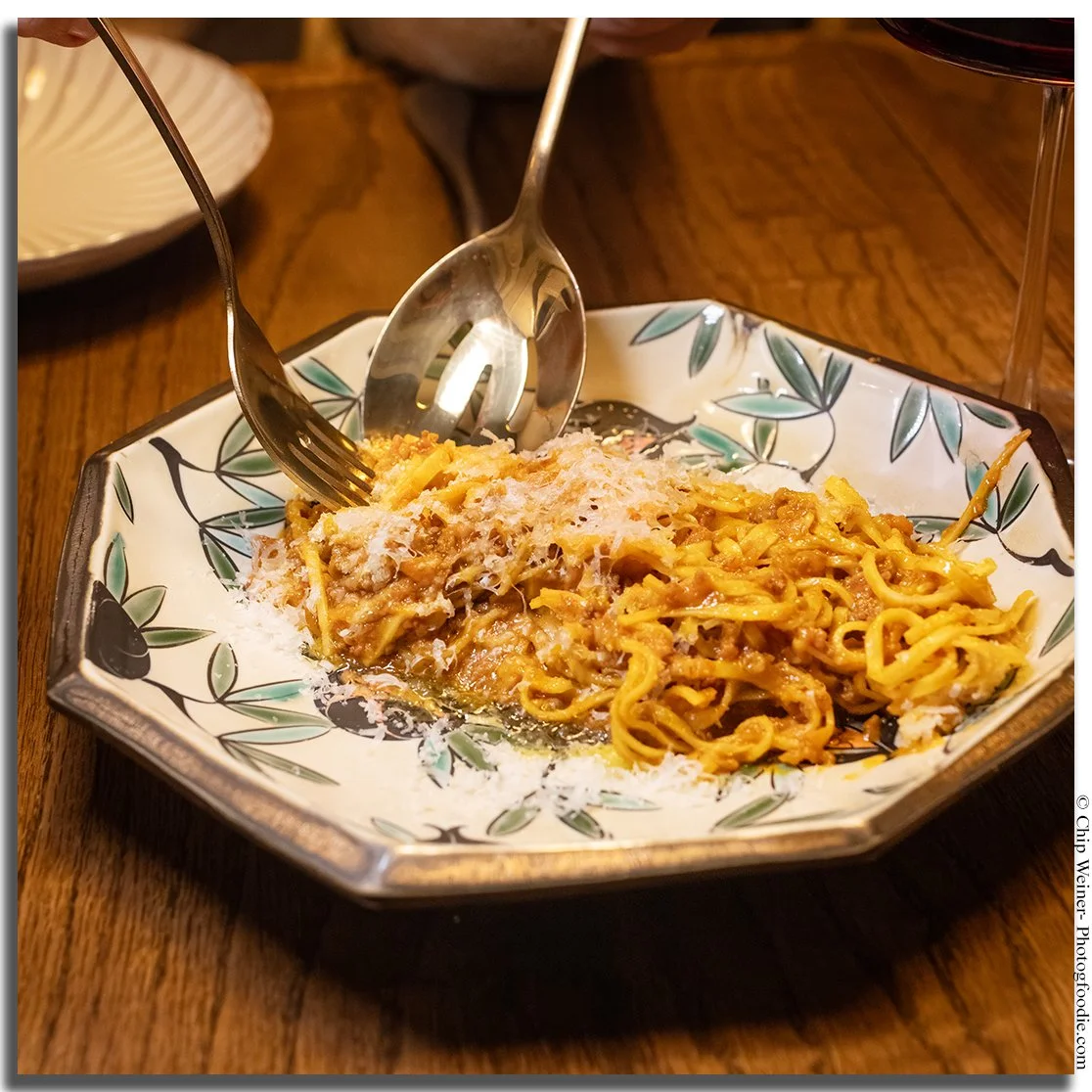
Silky tajarin coated in a rich mortadella and Providence Cattle Bolognese, finished with a subtle Japanese curry
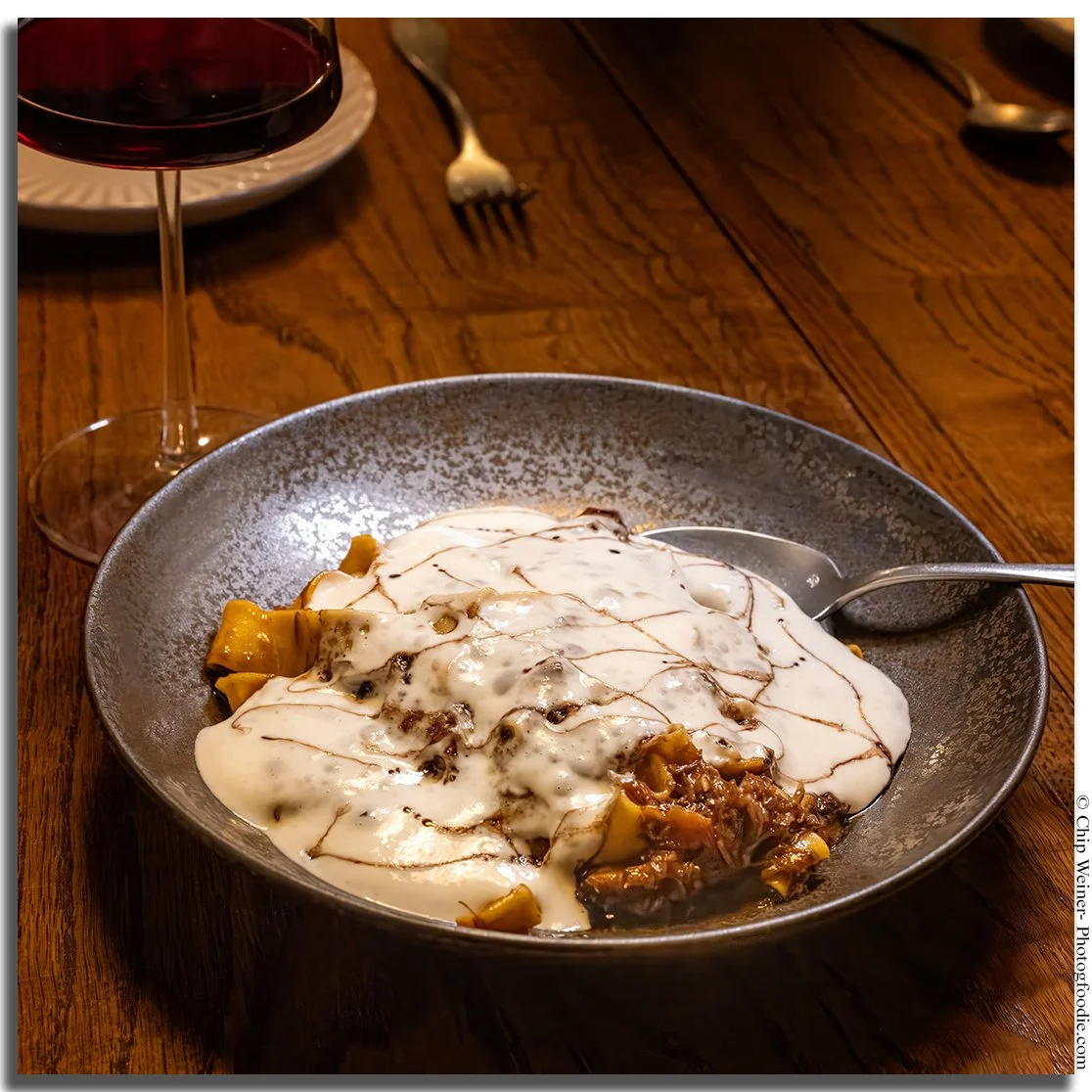
Wide ribbons of pappardelle layered with tender short rib, a kick of tobanjan, and rich taleggio fondue, finished with a criss-cross of aged balsamic
The crowd favorite is cappelletti ($32)- stuffed pasta, shaped like little hats, sitting in a pool of brown butter and topped with white soy maitake mushrooms and pickled daikon. There’s something magical about pasta and butter, and this is the gold standard. The dish is finished with aged balsamic. We are offered an upgrade to 50- and 100-year-old balsamic ($35 and $50, respectively), but after discussion, we decide our palates aren’t refined enough to know the difference. The dish is simple, elegant, and leaves us wanting more.
Mezzi rigatoni ($35) are a smaller, shorter version of classic rigatoni pasta. Kinjo’s version is served with tender Hokkaido snow crab, mixed in a velvety Kobocha cream- a puree made from Japanese pumpkin. The dish is sweet and crabby.
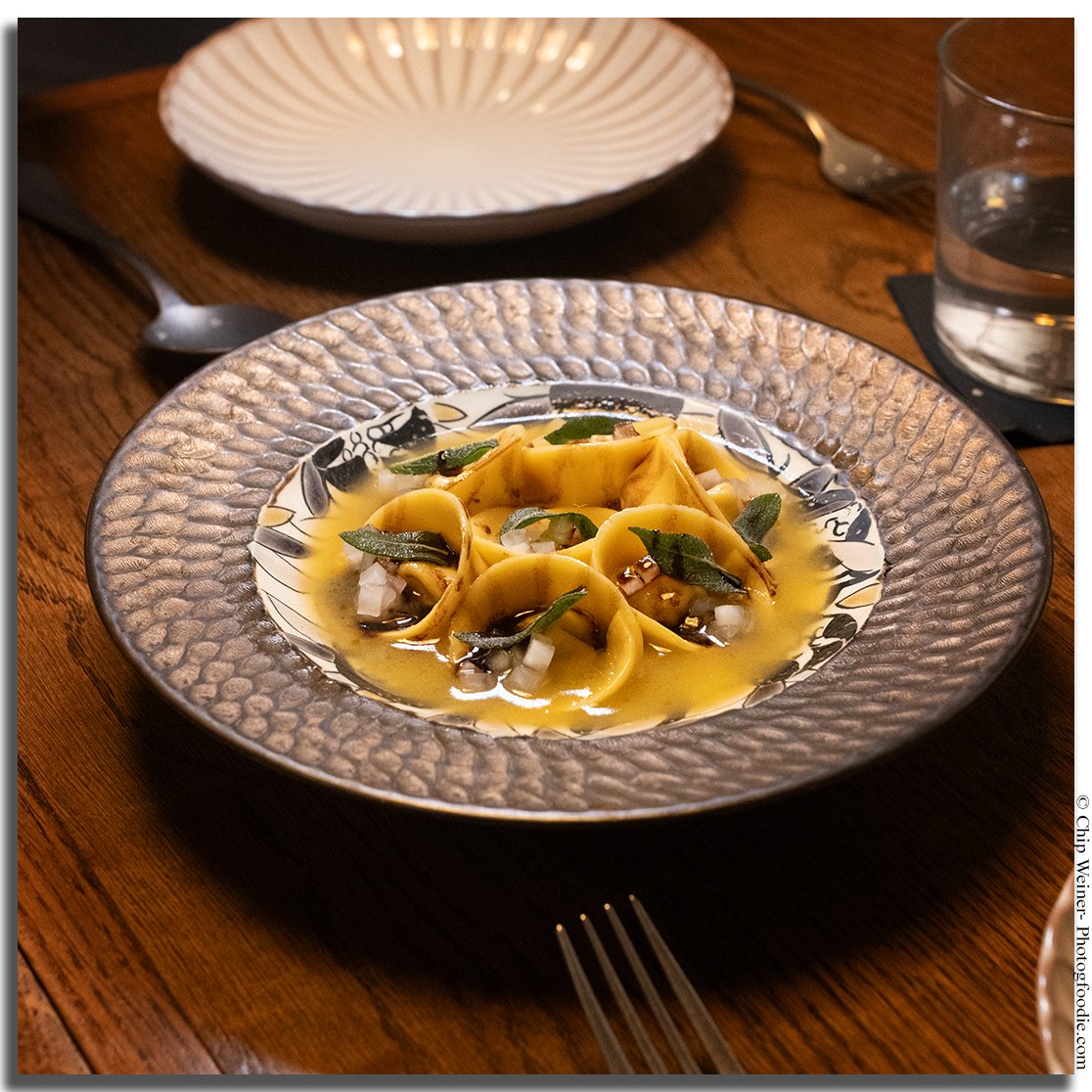
Delicate ricotta cappelletti bathed in brown butter, layered with umami-rich white soy maitake, bright pickled daikon, and a touch of aged balsamic. It’s the dish of the night.
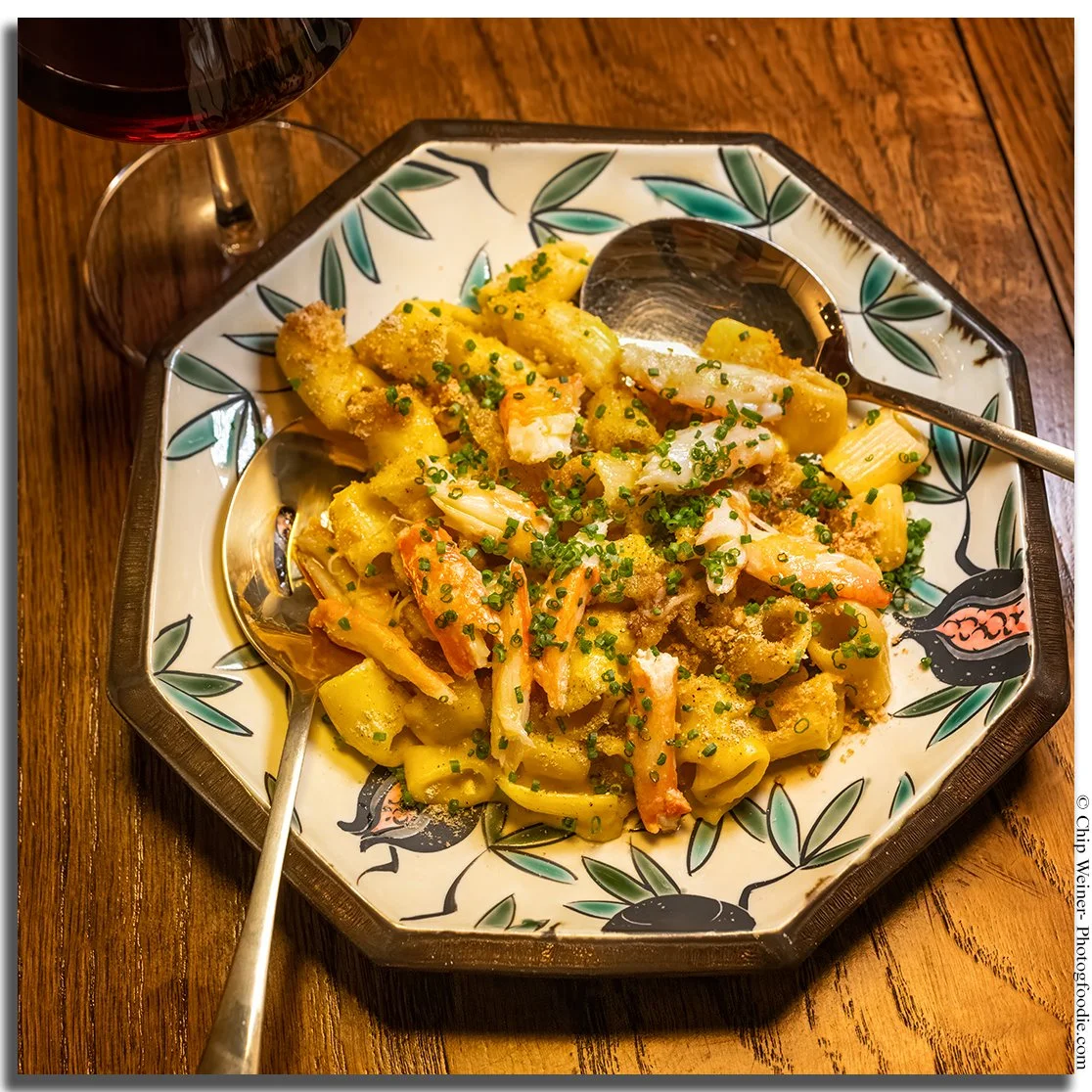
Mezzi rigatoni layered with sweet Hokkaido snow crab, silky kabocha cream, and warm notes of toasted cardamom
The three dolce offerings feel like a missed opportunity. Dessert is often a kitchen’s chance to put on a fanciful finishing touch. Yet, the selections here are underwhelming, especially considering the near-limitless potential to fuse the two cuisines into something inventive and evocative.
We start with a popcorn éclair ($12)- popcorn crémeux in an éclair with salted toffee and caramelized popcorn on top. It’s fun to look at, but it’s more of a party trick. The éclair is flaky, and they got the popcorn flavor right, though.
The chocolate tart ($12) is a slice of dark chocolate ganache on a crumbly crust, sprinkled with Italian hazelnut, shaved espresso, and dusted with Maldon salt. It’s nice, but it needs a bit more Itameshi pizazz.

A playful finish—Kinjo’s popcorn éclair layers silky popcorn crémeux with salted toffee and crisp caramelized popcorn
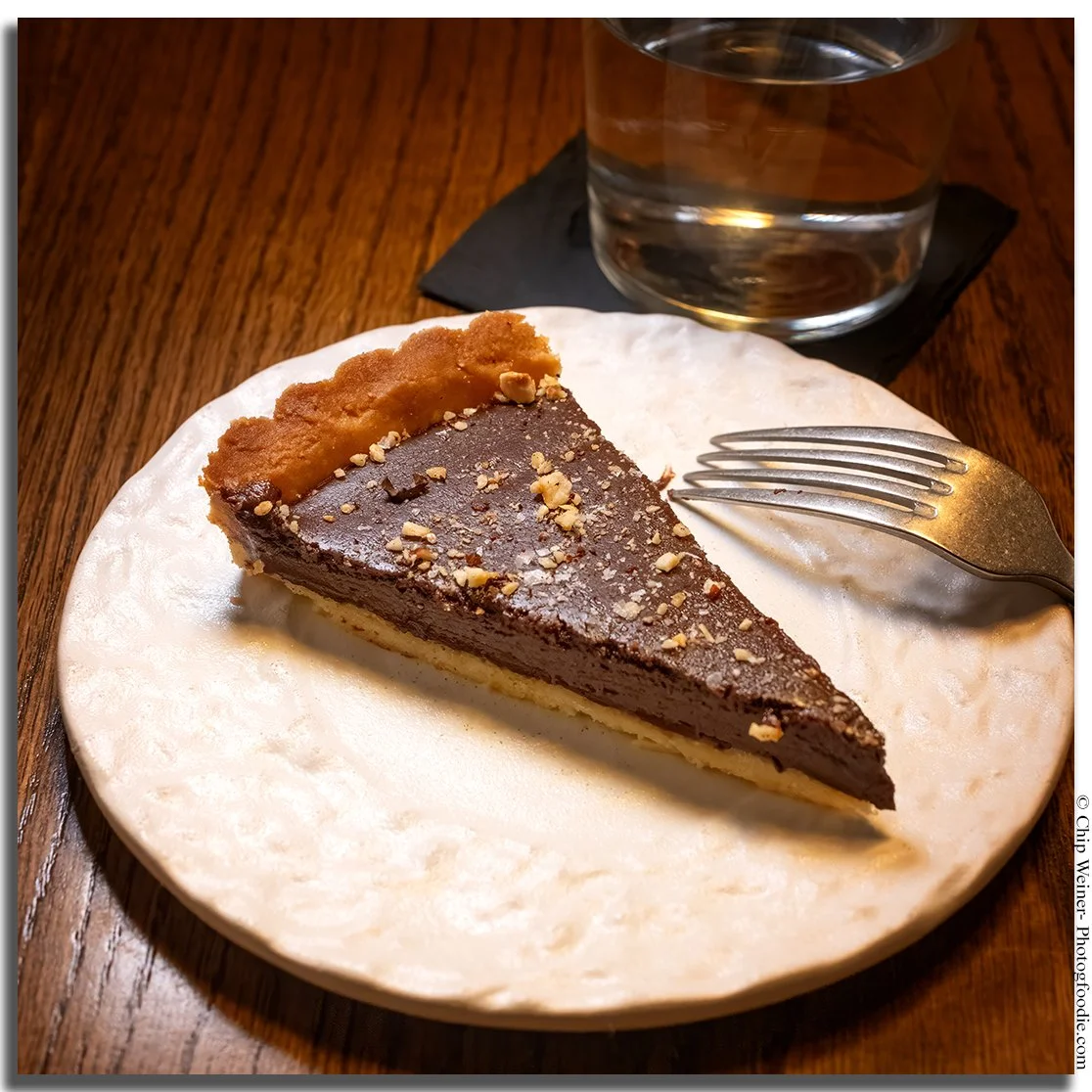
A rich dark chocolate tart layered with Italian hazelnut, shaved espresso, and a touch of Maldon salt for balance
Kinjo is a delicious and unique surprise. The mastery in the kitchen shines through the creativity of combining Japanese and Italian cuisines into fun, luscious dishes. It’s a sophisticated fusion. If you are ready for a break from the endless variations on the same theme, this is your place.
Service at Kinjo is concierge-level, with prices that land squarely in fine-dining territory. There’s ample free parking, no valet, and pleasantly low noise. Reservations are strongly recommended. The seasonal menu also gives diners a good reason to come back.
Kinjo - (813)304-0000 - 224 South Boulevard Tampa, FL 33606